

Many thanks to Folklore Review for selecting my little flash fairy tale.
Many thanks to Folklore Review for selecting my little flash fairy tale.
https://www.vestalreview.net/pygmalia

I am very pleased to share this link to Vestal Review where my flash Pygmalia was published in December 2024. I am grateful to EIC David Galef for nominating this work for a Pushcart Prize.
I feel fortunate that Identity Theory has given a home to my short work Baggage. As always, thank you for reading.

I just ended a video assessment with my general practitioner, who is patient and thorough. I have always been forthcoming about my struggles with anxiety and depression and it was this doctor who keenly diagnosed 9 years ago that I had developed fibromyalgia. Today, I completely flunked my anti depression screening. My physician takes her oath seriously and was loath to allow me to end our session without promising to make an appointment with a mental health professional. (Disclaimer: if you or someone you know is suffering from anxiety panic attacks or depression please seek help immediately.) While I appreciate her professional concern, I have a lifetime, my own, of experience with my mental state and I know exactly the source of this malaise and it might take another lifetime to cure it.
In 2016, my body quit. Long an advocate and proponent of endorphins, even in my most troubling mental states, my body would drag itself to a gym or the outdoors and push through a regimen that allowed it to keep soldiering, despite my troubled mind. When Trump began his first term and fascism began snaking its way through the halls of democracy, my body capitulated and fibromyalgia claimed its stake. There were days when light itself hurt my being. My doctor quickly determined that Cymbalta would help, along with acupuncture, diet and exercise. She was right. My body and my mind united in not just trying to sustain me but also in resisting the fascist threat. Volunteer. Donate. Educate. Share and keep doing all those things. “The arc of the moral universe is long but it bends toward justice” said Martin Luther King, Jr. By 2020, though weary and certainly bludgeoned by COVID, I could see justice. The Biden years would be comforting to me for what they were not more than for what they were. They were not seditious and grifting. They were not traitorous and embarrassing. Perhaps the arc had properly bent.
In October of 2024, I was part of a groundswell. No one will ever convince me Kamala Harris did not win our last election. Everyone could feel the energy. After the disappointing outcome, there would be finger pointing and ridiculous conjecture about what the campaign got wrong but I will tell you this – nothing. There was nothing wrong. She was the perfect candidate who ran a flawless campaign and a blind, Russian pig should’ve won that contest against Trump regardless. I will never accept that the most deceitful, duplicitous, felonious charlatan to ever take power in the United States fairly won the election of 2024.
Now, I am beset. I have alarmed my trusted physician. My body has succumbed to Covid twice in four months’ time and currently I am battling a sinus infection. And I am exhausted. Being American is exhausting; the shame and determination to do better only to feel I am tilting at windmills. The constant political circus, the everyday injustices, watching the flames of fascism race across the country faster than Santa Ana winds. It is not that I am shocked by the racist rhetoric, the rampant misogyny, the nepotism and deceit; I won’t pretend America has ever been better than those things. It is that in 2009, I began to believe that we could become the nation that so many want America to be. Instead, we are not now mired down but rapidly denigrating as the “Leader of the Free World”.
You see, it’s not the Oath Keepers of America who are failing democracy. People like that have been and always will be exactly what they are – willfully uneducated little pricks who feed off the machismo of others because they will never get enough of a leg up in the world to make a difference one way or another. It is the sons and daughters, mostly white, of upper middle-class America who are failing us all. These entitled crybabies look around and see people other than themselves beginning to thrive and deduce that somehow that must mean they themselves are being denied. As a white upper middle-class American woman, I will confess I take zero pride in being any of those things. I was born a white, upper middle-class female; I did nothing to merit any status. What has any Oath Keeper done to be more of an American than a Guatemalan woman who left her parents, strapped a child to her back, endured endured rape and torture and the Darien gap to come here and clean toilets? Proud to be an American? The fuck I am, when we are touting rapists and pedophiles and bigots. What pride could one feel? No. In truth, being an American has made me ashamed of humanity; “as goes America, so goes the world.” I see fascism rising, these awful despots clamoring for power, emboldened by what America has wrought.
How do you “citizen” when so many of our fellow citizens are being oppressed? Have you heard these questions: were there good southerners who didn’t have slaves but did nothing to stop slavery; were there good Germans who weren’t Nazis but said nothing when their neighbors were slaughtered? What answers did you hear?
My doctor squinted at the screen, as if she could determine through it if I am a danger to myself or others. A danger to others. I almost laughed. Should a doctor have asked that of Trump the morning of the inauguration? I don’t have the energy to harm myself. I will confess, I don’t want to see what comes next. If I could lie down peacefully in a field of poppies and sleep eternally you bet your ass I would. Who wants what is next? Who, besides the broligarchs and sycophants, could possibly want what comes next? What might truly gut me could be the answer.
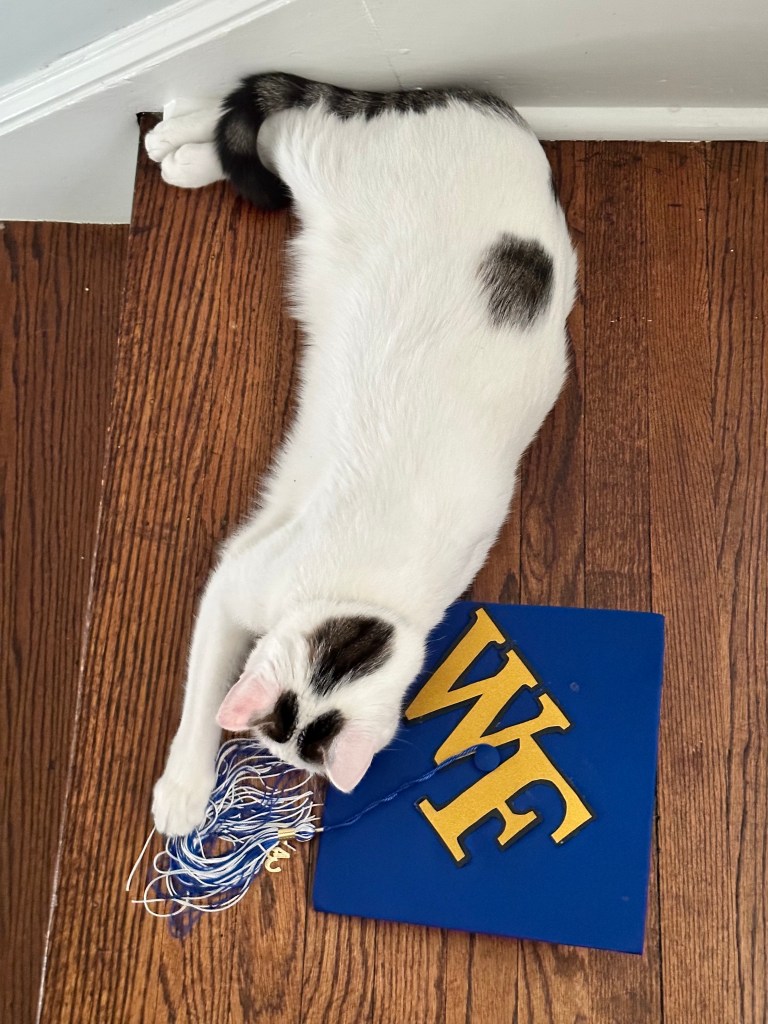
It is when I am about to leave to take our daughter to school, a little earlier this morning as she needs to be dropped off at the freshman building, and we don’t want to be caught behind the 66 bus or we will sit through two cycles at the stoplight, that Bobo, her pandemic kitten who is no longer a kitten but who has never properly used the cat box, decides to take a shit on the carpet in the foyer and as she is crouching, tail lifted like a defiant middle finger in my face, I grab the horrid little beast, holding her aloft like Simba in The Lion King, running toward the cat box in the sunroom, practically stepping on the flatulent 14 year old incontinent Boston Terrier, who has left yet another puddle of piddle in the dining room, and screaming at Bobo as she is dropping turds through the living room, I am also thinking that while I am so happy Catee’s best friend Delia was accepted to Tufts, and God knows I am because Delia is a great kid and a hard worker like Catee, but even so I have to acknowledge, damn it, as I also notice that Micky, the once feral cat we rescued two years ago, has picked, picked, picked at the new carpet in the living room, the same one Bobo has just bombed with a wet shit, I have to admit that, sweet Christ, can Catee just catch a damn break and get admitted to one of these top notch schools that she has worked her ass off to gain entry into because the last four years, and especially, especially these god awful isolating years of this pandemic, have cost us all so dearly, robbed us basically of happiness, left my poor girl crippled with anxiety, and especially now that U**, that same stupid school that accepted her last summer into its elite Senior Scholar Project, has rejected her, that I realize I am in the sunroom, holding this bloody cat we adopted to lessen our daughter’s depression and loneliness, over a goddamn empty cat box because I already have shit all over me.
I am electing to publish this CNF here instead of shopping it around literary magazines. This was written in a very Of The Moment vein for a workshop with Retreat West. I like it; I don’t love it but I think it accurately portrays the frustration, anxiety and utter craziness that families who are going through the college application process (in the U.S.) feel. The workshop challenge was to craft a one sentence story. RW is an amazing resource for writers. As always, thank you for reading!

A dense thud and a smear of blood left on the pane. I ask my husband to see if there is an injured bird in the yard. A soft christening of springtime rain is falling.
As I am packing, I wonder what good this trip will be; what good will it do us to spend our anniversary three towns over where the weather will be the same; the trees will have the same foliage; the flowers blooming there will be the same ones blooming here.
I open the hall closet and a cascade of winter hats, mittens, scarves, a tennis racket, assails me. When did we last play tennis, I ask myself? A vision, both painful and lovely, a tangle of tanned limbs, salty flesh; struggling with my tennis skirt. Naked from the waist down save shoes and socks. Were we those lovers?
Jacob, watery-eyed, stands in the hallway, his hands cupped as if receiving communion. I take a tentative step toward him; there is a sparrow in his hands. The bird’s eyes are closed but its chest is visibly rising and falling.
Oh Jacob, I say.
Help, he implores me.
He carries the sparrow to the kitchen and places it upon the counter. I brush a fingertip over its downy breast and feel the tiny heartbeat.
Jacob apologizes for crying. He apologizes for the injured bird. He apologizes for needing help.
Jacob, I whisper. I look at my broken husband and the wounded bird. Whom can I save?
I turn my attention to the sparrow.
It looks like a Lladro figurine, plumy with a slight sheen. I can hear the slightest coo, as if the bird is whispering some self -healing incantation. Jacob brings me a small cup of water and a sponge, which I dip and then gently press over the bird’s beak, its feathered throat.
The sparrow’s eyes fly open.
Jesus, I say and drop the sponge, backing away. The sparrow hops up on its little feet, grabbing purchase atop of a roll of paper towels. Spreading its wings, it flies straight from the kitchen, down the hall and out the open front door just as the rain has stopped.
My husband is ecstatic. In a voice unfamiliar, light as the down of a new chick, he tells me we have witnessed a good omen.
I’m ready for the weekend now, he says as he practically bounces from the room.
I remain, blink as the eerie after-rain sun streams through the kitchen windows. Jacob saw wings and flight. I saw something else. A sparrow with blue eyes, eyes the color of forget-me-nots; the color of the blanket wrapped around our stillborn child; the color we have lived in for 18 months.
I wipe down the counter, wash my hands. I take my multi-vitamin, find Jacob’s antidepressants and fish-oil supplements. I pack these into a sturdy, zippable pouch. Putting the pouch into my purse, I find a lens wipe. I am wiping, wiping, wiping my glasses, just hoping I will be able to see more clearly. I am still wiping, wiping, wiping my glasses as we drive to the town three towns over, where the trees have the same foliage as those at home, where the flowers blooming are the same as the flowers in our yard.
A version of this story, under the title The Color of My Love, was published, both in print and online, in NJ Indy magazine May 2023. Please find a print copy by visiting http://www.njindy.com.

Fever Dream
I dreamt in mango. Dreams so lush, I could taste the fruit. Months indoors, I had watched masked neighbors circling the block. As winter glacially thawed into a second spring, I needed a piercing sun.
In late spring, vaccinated yet wary, we soared south. No wings now can carry you far enough away from death, but I wanted to see feathers in colors other than grey and brown.
We arrive to a beach covered in sargassum, sulfuric and ubiquitous. Undeterred, feet splayed, rooting like spiderlillies, I stand in the sand.
As I let the sun leech the tension from my bones, a child, wearing one Mickey Mouse floaty skirts the edge of the surf. Tendrils of sargassum are in her hair. She waves at me with the vigor only a child would expend on someone she does not know. Sitting in the shallows, she piles fetid seagrass on her head and mock growls at me. I feign fear and it is marvelous. After two years of waking and sleeping in real dread, pretending feels cathartic. The child is overjoyed. She whoops and throws seagrass at me. I splash water to keep her away. She stomps forward before a wave catches her, sends her sprawling, a mouth full of seafoam. I wait for tears but she wipes the saltwater from her eyes and laughs.
A voice softly calls and the child stands. She looks down the beach and shouts to her mother in Spanish that she is coming. She smiles widely at me and says, “Happy! Bye!”
I let my body down into water. Happy. Bye.
Sky Island Journal published this flash in Issue 24, Spring 2023. The editors Jason and Jeff are supportive and encouraging and I was delighted that my work again garnered their attention.
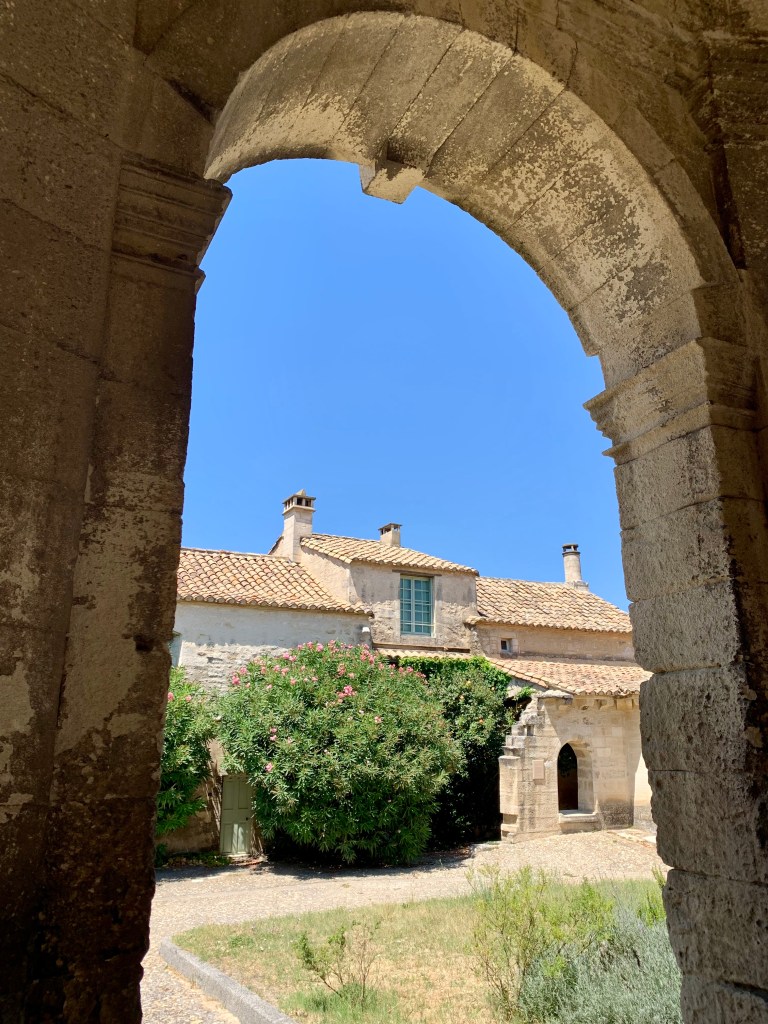
On our Honeymoon, I never even noticed an acrid smell. The langoustines, the salade gourmand, the tatare de boeuf, the shimmering, perspiring glasses of sublime rosé, all served with the efficient careless attention which is inherently French. All the while, French woods that had escaped bombings and marauding, splintered, and hissed, seemingly spontaneously combusting.
If I had taken off my shoes, pressed flesh to earth, would I have felt the stampede, the hooves, and claws, frantically searching for safer soil? If I had strolled from the glorious auberge, would I have noticed the townsfolk buying hoses and pitchforks, the Peugeots queueing for petrol?
I let you pour me another glass of La Chapelle Godonne.
Secretly, I seethed when you couldn’t put the rental car in reverse in Marseille. As you pounded the wheel, your face a proper Provencal rouge, I calmly left the vehicle and using my rusty schoolgirl French beseeched the fire truck driver – s’il vous plaît aider! Aider! – until his partner patted my hand. A steep hill – a road that should only run one way, but France, n’est-ce pas, and so he left his hulking vehicle facing our car—Oui Madame! I practically yanked a trembling you from the driver seat, let the virile Jean-Luc back our ridiculous SUV down the hill, so his hulking fire truck could pass. Infirm, on the corner, you clutched your back, coughed phlegm into the street.
Later in Arles, you howled—I took it for indignation—No parking! No parking! My back, my back! Only a wavering haze, like an oil slick smudged across the morning clouds, indicated suffering on the horizon.
Finally, asleep in our ark— the Corsica Linea ferry—we left the mainland and I thought perhaps you might be OK.
I preened in Corte, the rugged little mountain town, as the shopgirl insisted, Mais non! Tu parles bien! But when I looked for your admiration, I saw heat and ruin. We could not outrun it.
The doctor back in Maryland wants to run more tests. It might be fluid, perhaps pus in the right lung. It could be a tumor. Bien sûr, this would explain the back pain.
In your hospital room, horror stricken we watch Toulon in flames. I hold your grey hand; how did we not know?
I was elated when Meg Pokrass gave this work an Honorable Mention in Cleaver Magazine’s Microflash competition. Additionally, Cleaver then nominated this work for Best Microfiction. Please check out all of the great work in Cleaver Magazine’s 10th Anthology.

Years later, when the village was no longer a village, when being left-handed or redheaded or homosexual was no longer a crime, people who knew about Gretchen Schwartz referred to her as the girl with heterochromia. When Gretchen met Johan Scherer, he called her a witch.
Before Gretchen Schwartz had been born, no one in the village of Zweifel thought much about the color of eyes. Blue eyed, green eyed, brown eyed alike all worked and harvested, toiled, and praised. No one was wealthy but no one was poor. The day before Gretchen was born, Gunther Schwartz found gold in the stream behind his house. The day after she was born, Marta, mother of his child, died. Perhaps, if Gretchen’s eyes had both been blue, or both been brown, no one would have worried about the good luck or the grave misfortune. Gold in the hills was not unusual and death after childbirth was not unusual either. In a different age, the eyes of Gretchen Schwartz might have been celebrated or at least treated with mild curiosity instead of revilement but as is the case with a many a spectacular thing, Gretchen’s eyes inspired jealousy and fear.
Because Marta had died, Gunther sent for his mother Fee to help with the baby. Fee was apple-round, warm-scented like cinnamon, a quintessential grandmotherly type long before the birth of her first grandchild. She loved wholly and fiercely and knew the instant she gazed upon Gretchen that the child would need to be protected. Fee and Gunther told the villagers the babe was slight, would need to be closely kept, sheltered to survive. Fee strapped the raven-haired, snow-skinned child to her back and went about the business of the household. Gretchen’s earliest memories were of pies bubbling and baking, birdsong underneath thick boughs, meadows full of feverfew. Fee sang songs and recited stories of lovers and warlocks. Gretchen learned to darn socks, spice a stew, skin a rabbit, and churn butter before she was three.
Gunther and Fee knew the days of solitude would one day end. Villagers, by nature, are curious. A huntsman would report hearing a voice to rival an angel’s singing. A dairy farmer would tell how his prize heifer had come back to the barn bedecked in garlands. A maid would catch her beau spying on a beauty tending the garden behind the Schwartz house.
And so it happened that this maid, the daughter of the Bürgermeister, became compelled to meet Gretchen Schwartz. Inga was betrothed but it was a marriage of arrangement. Her intended, the young man spying upon Gretchen, was the son of the Bürgermeister of the neighboring village. Thus, one day, when Fee had gone to market and Gunther was on the hunt, Inga stole into the garden of the Schwartz house. Fee was much beloved but there was village chatter about how her garden grew so well. Some neighbors with less successful gardens secretly harbored beliefs that magic was afoot. Indeed, Inga had never seen chard so large nor so many different colors of zinnias. She was marveling at the wondrous size of the melons and squash when she heard a melodic voice. She took cover beneath elephantine leaves of spinach. She listened raptly to the beautiful rendition of a childhood song she knew well. She was enchanted. When the song ended, she peered out and was met with a gaze that astonished her. A face, round and pure, like alabaster, with a nose straight and small, two black firmly arched eyebrows, full lips which looked berry-ripe and most astonishing of all, an eye the color of the sky and one of warm molasses. Inga fell back upon a cucumber, which loudly squished beneath her. Surely, she had seen the face of fairy or an angel. Could a human have ever been made so beautiful? A delicate laugh, like the tinkling of bells, and then a snow-white hand with long, lovely, tapered fingers extended to her through the tangle of vines and leaves. Gretchen’s touch sounded song through Inga’s body. Her skin was warm, softer than down. Her grasp was firm but gentle. Gretchen pulled Inga up from the garden patch and the two young women stood scant inches apart. Inga could smell peaches and roses and a scent she would never be able to fully identify. And when words failed to find her, Inga felt hot tears forming as the other girl embraced her and whispered, “Hello. I’m Gretchen.”
Gretchen Schwartz had never met another person besides Fee and Gunther. She had never shaken a hand or introduced herself. She did what she always did when she encountered her grandmother or father. She had only known love.
Inga felt her body tighten like a thread pulled fast before tying the knot, and then she felt a flood of warmth, an attraction to another like she had never known possible. She turned her face slightly, finding the girl’s pink seashell of an ear and whispered her own name.
It is said that Love cannot be concealed. Unfortunately, for Inga, but most especially for Gretchen, this was true. Johan, Inga’s intended, recognized immediately the passion she felt for Gretchen, as he too had such feelings for the mysterious girl. He felt shocked and betrayed watching the two girls embrace, as well as aroused and angry. The boy stood up from behind the boulder past the garden gate and denounced Gretchen.
“Witch! Harlot! You have bewitched my beloved!”
Inga, recognizing the wrathful voice, freed herself from Gretchen and ran past her, out the garden, down the lane, back to her house and the safety her father would afford her. Gretchen, scared and confused but assured of her own goodness, began to approach Johan. She opened her arms to him, to embrace him and he let fly the arrow which pierced her heart.
In that patch of garden, upon one side blue Forget-Me-Nots bloom year-round; the other side is always fallow, mud-brown and hardened.
Sow seeds carefully.
My first written stories were fairy tales so I was very happy to discover that the celebrated Ellipsis Zine in the UK was calling for myths, legends and fairy tales for their 12th anthology WADE. If you enjoyed my maudlin little story, I highly encourage you to seek out Ellipsis Zine and read all of the beautiful work in this newest anthology.
 The F.H.Gray Matter